Digital Literacy Empowerment for Rural Women Micro-Entrepreneurs in West Java, Indonesia
Keywords:
digital literacy, women empowerment, rural entrepreneurship, participatory developmentAbstract
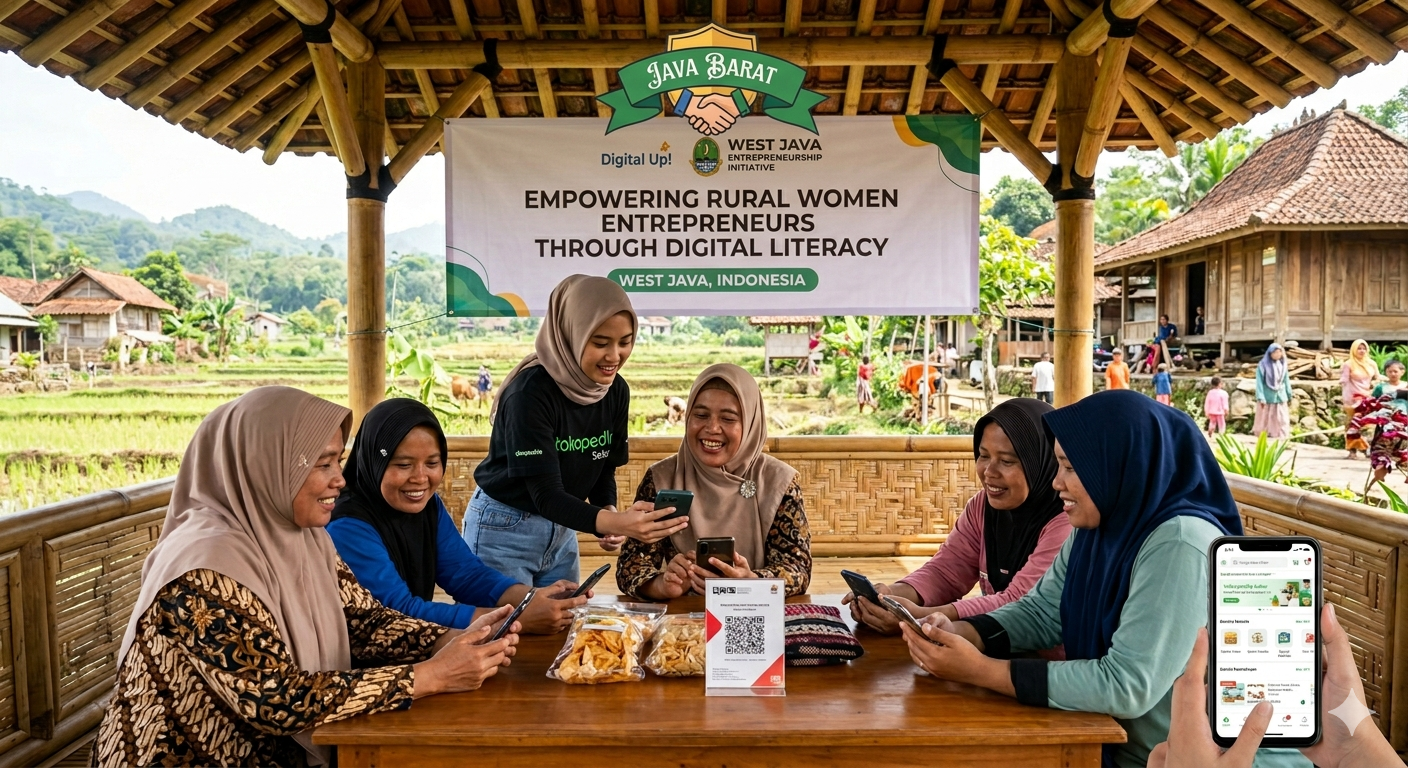
Purpose – This study aims to examine the effectiveness of digital literacy empowerment programs for rural women micro-entrepreneurs in West Java, Indonesia. The research addresses challenges faced by women-owned micro-enterprises in adapting to digital business practices, particularly in online marketing, digital financial management, and technology utilization. The study highlights the importance of community-based digital empowerment in improving economic resilience and social participation among rural women entrepreneurs.
Design/methods/approach – The study employed a mixed-method approach involving surveys, semi-structured interviews, and field observations. Data were collected from 85 women micro-entrepreneurs participating in a six-month empowerment program conducted collaboratively by universities, local governments, and community organizations. Quantitative data were analyzed descriptively, while qualitative findings were interpreted through thematic analysis to identify major empowerment outcomes and implementation challenges.
Findings – The findings indicate that 78% of participants experienced increased online business engagement, while 64% reported improved household income stability after participating in the program. Participants also demonstrated greater confidence in using digital payment systems and social media marketing tools. However, limited internet access, low digital readiness among older participants, and inconsistent post-training mentoring emerged as major obstacles affecting program sustainability.
Research implications/limitations – The study was limited to selected rural communities in West Java and involved a relatively small sample size, which may affect the broader generalizability of the findings. Variations in local infrastructure and digital access also influenced participant outcomes.
Originality/value – This study contributes to community empowerment literature by demonstrating how participatory digital literacy programs can strengthen women’s economic resilience in rural areas. The findings provide practical insights for policymakers, universities, and development institutions seeking sustainable technology-based empowerment strategies in Southeast Asia.
References
Ahmed, S., & Rahman, T. (2021). Digital empowerment and women entrepreneurship in developing communities. Journal of Community Development Studies, 15(2), 112–128. https://doi.org/10.2147/jcds.2021.1542
Ardiyanti, L., & Wijanarko, B. (2020). Community participation in rural digital transformation programs in Indonesia. International Journal of Rural Development, 8(1), 45–58. https://doi.org/10.1080/ijrd.2020.88321
Arin, M. K., Umam, K., Ramdani, I., Pratiwi, K., & Rubangi, S. (2026). Negotiating care, distance, and well-being: Psychosocial dynamics of transnational families of Indonesian migrant workers. Icodev: Indonesian Community Development Journal, 7(1), 49–68.
Fitriani, N., Hidayat, A., & Santoso, M. (2022). Social media utilization among women-owned micro-enterprises in West Java. Asian Journal of Entrepreneurship and Innovation, 6(3), 77–91. https://doi.org/10.33545/ajei.2022.60307
Hassan, R., & Karim, N. (2019). Digital literacy and economic resilience in Southeast Asian rural communities. Journal of Social Innovation and Empowerment, 11(4), 201–216. https://doi.org/10.22146/jsie.2019.11405
Jahidin, A., Albana, Y., Ramdani, I., & Dermawati, S. S. (2024). Perception of parenting practices in Pesantren Al-Ittifaqiyah through the eyes of santri. Profetik: Jurnal Komunikasi, 17(1).
Kadiyono, A. L., Sulistiobudi, R. A., Haris, I., Wahab, M. K. A., Ramdani, I., et al. (2020). Develop leadership style model for Indonesian teachers performance in Education 4.0 era. Systematic Reviews in Pharmacy, 11(9), 363–373.
Kurniawati, D., & Prasetyo, H. (2023). Participatory approaches in community-based entrepreneurship education. Community Engagement Review, 9(2), 133–147. https://doi.org/10.31763/cer.2023.9211
Lestari, P., Widodo, S., & Amalia, R. (2021). Empowering rural women through digital financial inclusion programs. Journal of Asian Economic Empowerment, 5(1), 55–70. https://doi.org/10.1186/jaee.2021.50109
Masruroh, I., & Ramdani, I. (2021). Perspektif teori pada permasalahan anak dan keluarga: Studi kasus tentang disfungsi dan fungsi keluarga di Kabupaten Musi Banyuasin. Jurnal Hawa: Studi Pengarus Utamaan Gender dan Anak, 3(1).
Mulyani, E., & Yusuf, K. (2020). Challenges of technology adoption among micro-enterprises in rural Indonesia. Indonesian Journal of Community Practice, 4(2), 89–101. https://doi.org/10.20473/ijcp.v4i2.2020
Rahman, F., Abdullah, S., & Chen, Y. (2022). University-community partnerships for sustainable local empowerment programs. Journal of Participatory Development, 13(1), 21–39. https://doi.org/10.1080/jpd.2022.13014
Ramdani, I. (2015). Peran ibu dukuh dalam pemberdayaan masyarakat: Studi pengorganisasian kebun gizi mandiri Dusun Karet, Desa Pleret, Kecamatan Pleret, Kabupaten Bantul (Undergraduate thesis).
Ramdani, I. (2018). Pelaksanaan rehabilitasi sosial terhadap anak korban tindak pidana perkosaan oleh Satuan Bakti Pekerja Sosial di DIY (Master’s thesis, UIN Sunan Kalijaga Yogyakarta).
Ramdani, I. (2020). Intervensi pekerja sosial generalis terhadap klien anak: Pekerja sosial perlindungan anak Kementerian Sosial RI di DI Yogyakarta. WELFARE: Jurnal Ilmu Kesejahteraan Sosial, 9(1).
Ramdani, I. (2021). Forensic social work practices: The process diversion of children facing the law in Yogyakarta. WELFARE: Jurnal Ilmu Kesejahteraan Sosial, 10(1), 65–65.
Ramdani, I. (2021). Supervisi praktik pekerjaan sosial.
Ramdani, I. (2023). Empowerment and livestock farming: A holistic approach to local communities. WELFARE: Jurnal Ilmu Kesejahteraan Sosial, 12(2).
Ramdani, I. (2023). From ritual to reality: The application of religious values and da'wah in tahlilan in the Nahdliyin community. Jurnal Dakwah: Media Komunikasi dan Dakwah, 24(2), 133–159.
Ramdani, I. (2023). Perubahan sosial dan pembangunan: Transformasi masyarakat menuju masa depan yang lebih baik.
Ramdani, I. (2024). Metode penelitian.
Ramdani, I. (2024). Transnational da'wah and migrant community empowerment: A case study of Pesantren An-Nahdloh in Malaysia. Jurnal Dakwah, 25(2).
Ramdani, I., & Indriyani, P. I. (2024). Wiwit mbako: Integrating Islamic values and agricultural practices in Temanggung’s tobacco farming. In Mainstreaming Indonesian Islam: Family, Youth, Wellbeing, and the Path to Social Transformation.
Ramdani, I., Wenando, F. A., & Ondri, D. (2025). Religious-cultural mediation in technology adoption: A qualitative study of Islamic communities in Indonesia. Surau Journal of Islamic Studies, 1(2), 100–116.
Siregar, M., & Nugroho, T. (2021). Digital inclusion strategies for marginalized women entrepreneurs. International Journal of Social Empowerment, 7(3), 140–156. https://doi.org/10.2139/ijse.2021.7345
Yuliana, A., & Hartono, D. (2023). Evaluating the impact of digital literacy training on rural micro-business sustainability. Journal of Community Engagement and Technology, 10(1), 66–81. https://doi.org/10.5523/jcet.2023.10106
Published
How to Cite
Issue
Section
License

This work is licensed under a Creative Commons Attribution-ShareAlike 4.0 International License.