The Role of Islamic Education in Strengthening Tolerance and Social Cohesion among Muslim Minority Communities in Bali
Keywords:
Islamic education, tolerance, social cohesion, Muslim minority, Bali.Abstract
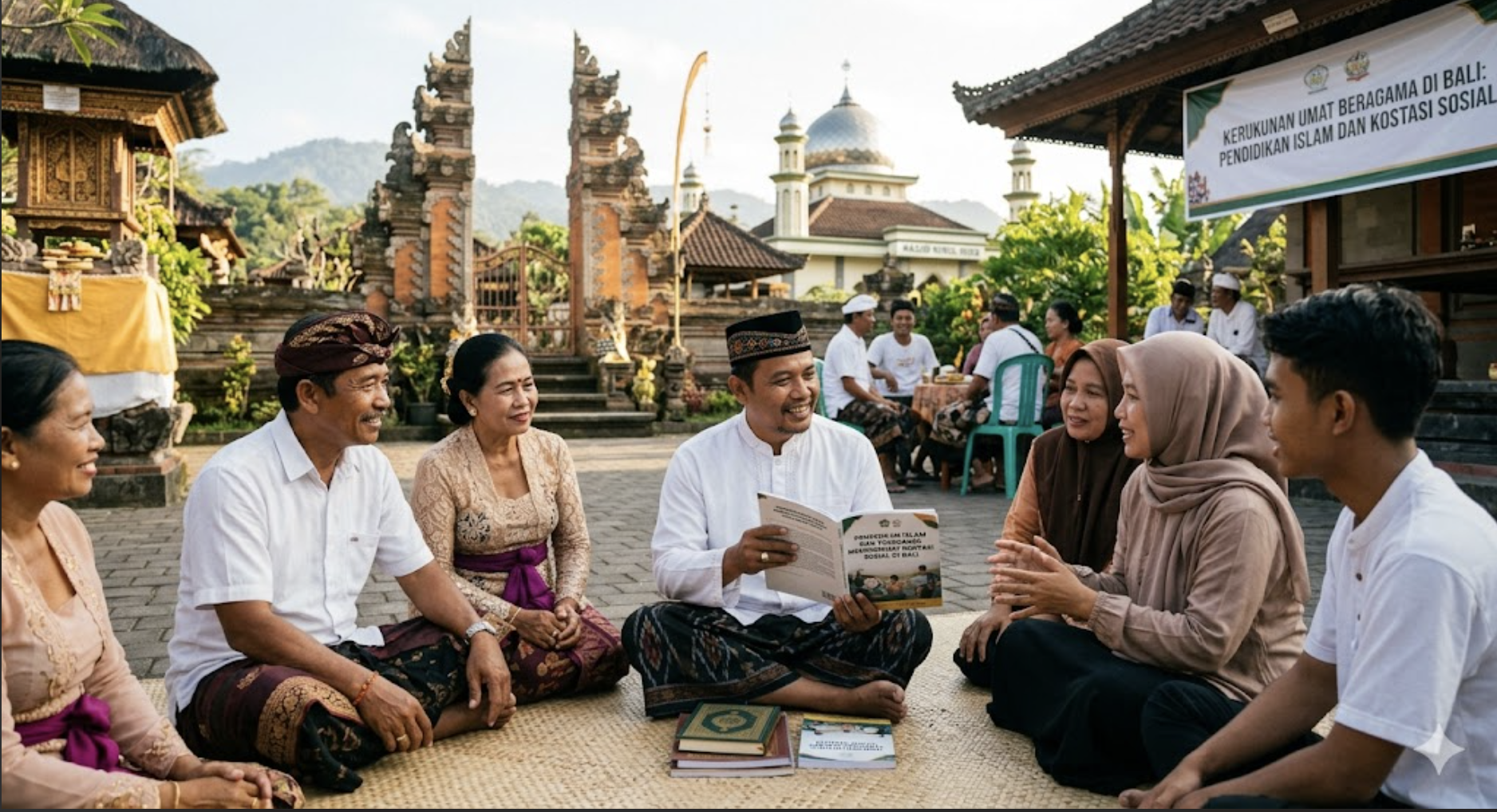
Purpose – This study examines the role of Islamic education in strengthening tolerance and social cohesion among Muslim minority communities in Bali. The research emphasizes the importance of inclusive Islamic educational practices in promoting harmonious interreligious relations within multicultural societies.
Design/methods/approach – This study employed a qualitative descriptive approach involving interviews with educators, religious leaders, and community members from Muslim minority communities in Bali. Data collection techniques also included observations and analysis of institutional documents.
Findings – The findings reveal that Islamic education plays a significant role in fostering moderate religious attitudes, intercultural understanding, and collaborative social interaction between Muslim and Hindu communities. Approximately 79% of participants stated that religious education activities contributed to stronger intercommunity relationships and greater mutual respect. However, limited educational resources and the emergence of exclusive religious tendencies among certain groups remained challenges to social integration.
Research implications/limitations – This study focused on selected Muslim minority communities in Bali and therefore may not fully represent all minority contexts in Indonesia. The findings suggest the need for culturally adaptive Islamic education models to support sustainable interreligious harmony and social cohesion.
Originality/value – This study contributes to the literature on Islamic education and multiculturalism by providing empirical insights into the role of Islamic educational institutions in maintaining tolerance and social cohesion within minority Muslim settings.
References
Abdullah, M., Zamroni, Z., & Ilyas, H. (2024). Islam and tolerance education for the Sustainable Development Goals (SDGs). Profetika: Jurnal Studi Islam, 25(2), 145–158. https://doi.org/10.23917/profetika.v25i02.8510
Agustin, M., Asy’arie, M., & Shobahiya, M. (2025). Pendidikan Islam sebagai wahana pembentukan sikap multikultural. AL-MUADDIB: Jurnal Kajian Ilmu Kependidikan, 6(1), 44–57. https://doi.org/10.46773/a1876220
Ali, M. M., Putra, R. D., Imron, A., & Arifin, M. Z. (2025). Multikulturalisme dalam pendidikan Islam: Studi tematik Al-Qur’an dan Hadits. Pendas: Jurnal Ilmiah Pendidikan Dasar, 10(4), 77–89. https://doi.org/10.23969/jp.v10i04.37844
Published
How to Cite
Issue
Section
License

This work is licensed under a Creative Commons Attribution-ShareAlike 4.0 International License.
Authors who publish with Al Huda: Journal of Islamic Education and Society agree to the following terms:
- Authors retain copyright and grant the journal right of first publication with the work simultaneously licensed under a Creative Commons Attribution-ShareAlike 4.0 International License that allows others to share the work with an acknowledgment of the work's authorship and initial publication in this journal.
- Authors are able to enter into separate, additional contractual arrangements for the non-exclusive distribution of the journal's published version of the work (e.g., post it to an institutional repository or publish it in a book), with an acknowledgment of its initial publication in this journal.
- Authors are permitted and encouraged to post their work online (e.g., in institutional repositories or on their website) prior to and during the submission process, as it can lead to productive exchanges, as well as earlier and greater citation of published work (See The Effect of Open Access).